For a startup founder, established business, or enterprise planning its next digital product, choosing the right development partner is often more difficult than choosing the technology itself.
You may have a clear app idea, but several questions quickly follow: Who should build it? What will it cost? How long will development take? Which technology should be used? And how can you make sure the final product is scalable?
This is one reason mobile app development in India has gained strong attention from businesses across different markets.
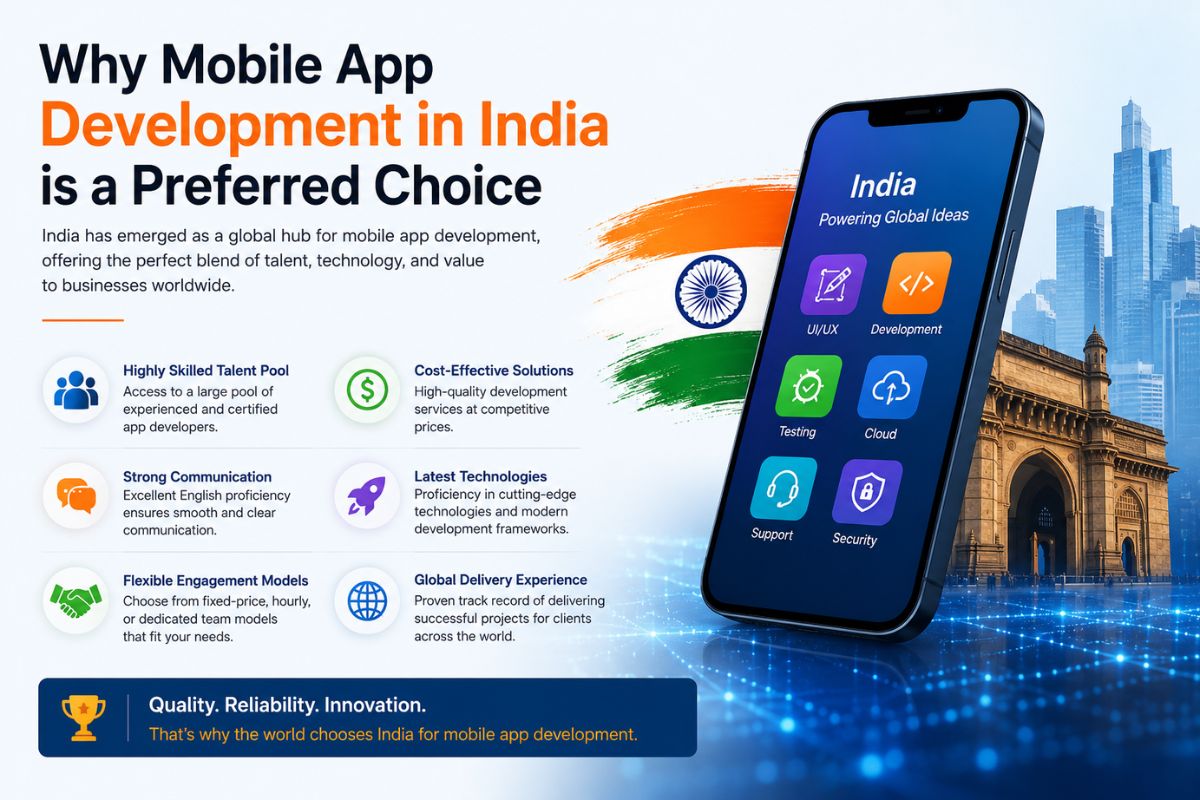
India offers a combination of experienced technology professionals, competitive development costs, flexible engagement models, and experience working with international clients. However, the real advantage is not simply about paying less. It is about getting access to the right combination of skills and technology for your project.
Here are some of the key reasons businesses consider India for mobile app development.
1. Competitive Development Costs Without Limiting Your Options
Budget is an important part of every app development project.
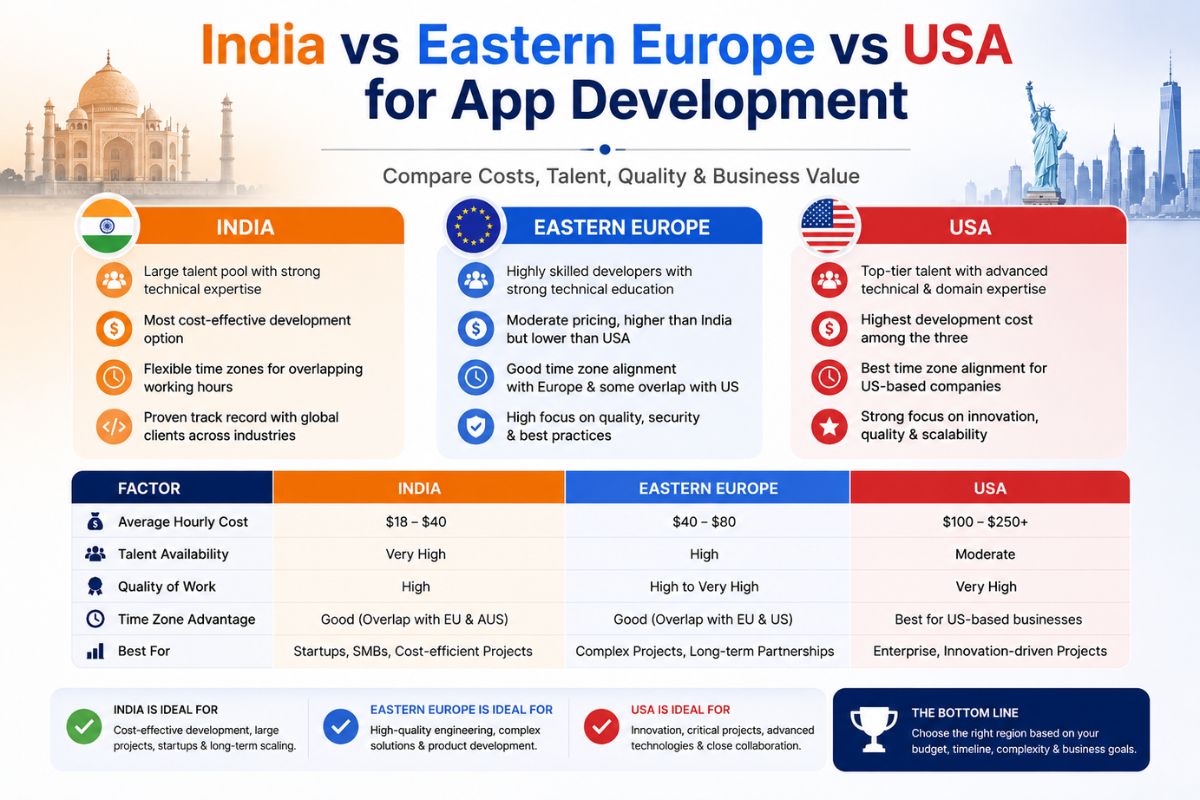
Development costs can vary significantly between countries and even between individual companies. Factors such as app complexity, number of platforms, UI/UX requirements, backend architecture, integrations, security requirements, and development team size all influence the final price.
India can be attractive because businesses can access experienced developers and complete development teams at comparatively competitive rates.
This can be particularly useful for startups and growing companies that want to invest their budget in product development, marketing, customer acquisition, and future improvements rather than spending most of it on the initial build.
The important point is to compare value rather than hourly rates alone. A reliable development partner should be able to explain what is included in the estimate and what may affect the final cost.
2. A Broad Technology Talent Pool
One of India’s biggest strengths is its large technology ecosystem.
Businesses looking for an app development company in India can find professionals working across different technologies and project requirements. This makes it easier to build a team around the actual needs of a product instead of trying to fit the project into a limited skill set.
Depending on the application, a development team may include:
- Mobile app developers
- UI/UX designers
- Backend developers
- QA and testing specialists
- Project managers
- Cloud and DevOps professionals
- AI and machine learning specialists
This becomes especially valuable when an application requires several technologies to work together.
For example, an e-commerce application may need mobile development, payment gateway integration, cloud infrastructure, database management, analytics, and a strong user experience. Having access to different specialists under one development setup can simplify the process.
3. Experience With Modern App Development Technologies
Today’s mobile applications are very different from basic apps built a few years ago.
Businesses now expect applications to offer fast performance, personalized experiences, secure payments, real-time communication, automation, and seamless integration with other platforms.
Indian development companies work with a wide range of modern technologies and frameworks, including Flutter, React Native, native Android, native iOS, cloud platforms, APIs, AI, and machine learning.
Cross-platform frameworks can also help businesses launch applications across Android and iOS while sharing a significant portion of the development codebase.
For the right project, this can reduce development effort and make future maintenance easier.
However, there is no single technology that is perfect for every application. The development approach should be selected according to the product’s features, performance requirements, target audience, and long-term plans.
4. Strong Communication With International Clients
Communication is one of the biggest concerns when outsourcing software development.
A technically capable team still needs to understand the client’s requirements, respond to feedback, explain technical decisions, and communicate progress clearly.
English is widely used within India’s technology and business sectors, making communication easier for international clients.
Modern collaboration tools also remove much of the friction associated with working with an overseas development team. Video meetings, project management platforms, instant messaging, documentation, and online demonstrations allow clients to stay involved throughout the development process.
For international businesses, having a dedicated project manager or point of contact can make this process even smoother.
5. Time-Zone Differences Can Become an Advantage
Working with an Indian development team can also provide a useful time-zone advantage for businesses in North America, Europe, the Middle East, and other regions.
When managed properly, development work can continue outside the client’s normal working hours.
For example, a client can share feedback during its working day, while the development team continues working on those updates afterward. The next morning, the client may already have progress to review.
This does not automatically make a project faster, but an effective workflow can help teams use their combined working hours efficiently.
6. Flexible Hiring and Engagement Models
Not every company needs the same development arrangement.
Some businesses have a clearly defined project and want a fixed scope. Others need an extended development team that can work with their internal employees.
Indian mobile app development companies commonly offer different engagement approaches, such as:
Fixed-price development: Suitable when requirements and scope are clearly defined.
Dedicated development teams: Useful when a business wants developers to work as an extension of its existing team.
Time and material models: Suitable for projects where requirements may evolve during development.
This flexibility allows businesses to choose an arrangement based on their project size, budget, and level of involvement.
7. Suitable for Startups as Well as Enterprises
Another reason India attracts international app development projects is the variety of businesses its technology companies work with.
A startup may need an MVP to test its idea with early users. A growing company may require a customer-facing application with payment and analytics integrations. An enterprise may need a more complex solution involving APIs, cloud infrastructure, security, automation, and multiple user roles.
The development process can be structured around the requirements rather than using the same approach for every client.
How Much Does Mobile App Development Cost in India?
There is no single price for developing a mobile application in India.
A basic application with limited features can cost considerably less than a complex platform involving custom backend development, third-party integrations, real-time functionality, advanced security, or AI-powered features.
The final estimate generally depends on:
- Number and complexity of features
- Android, iOS, or cross-platform development
- UI/UX design requirements
- Backend and database requirements
- Third-party API integrations
- Testing and quality assurance
- Cloud infrastructure
- Maintenance and future updates
For this reason, businesses should avoid selecting a development company solely on the basis of the lowest quotation.
How Devherds Helps Businesses Plan Their App Projects
Before development begins, understanding the project itself is extremely important.
Devherds takes a consultation-first approach by offering a free 30-minute call where businesses can discuss their application idea and requirements with the team.
During the conversation, you can discuss the features you want, the platforms you are targeting, your expected timeline, technical requirements, and your approximate budget.
The purpose of this initial discussion is to help you understand what needs to be built, how it could be approached, how long the project may take, and what factors can influence the overall cost before moving ahead with development.
For startups that are still validating an idea or businesses that are comparing development options, a conversation like this can provide useful direction before making a larger investment.
FAQs About Mobile App Development in India
Is India good for mobile app development?
Yes. India has a large technology ecosystem and offers access to developers, designers, testers, project managers, and specialists across a wide range of technologies. The right company should still be selected based on its experience, portfolio, communication, and understanding of your project.
How much does it cost to develop an app in India?
The cost depends on the application’s complexity, features, platforms, integrations, design, backend requirements, and development team. A proper estimate should be prepared after understanding the project requirements.
How long does it take to build a mobile app in India?
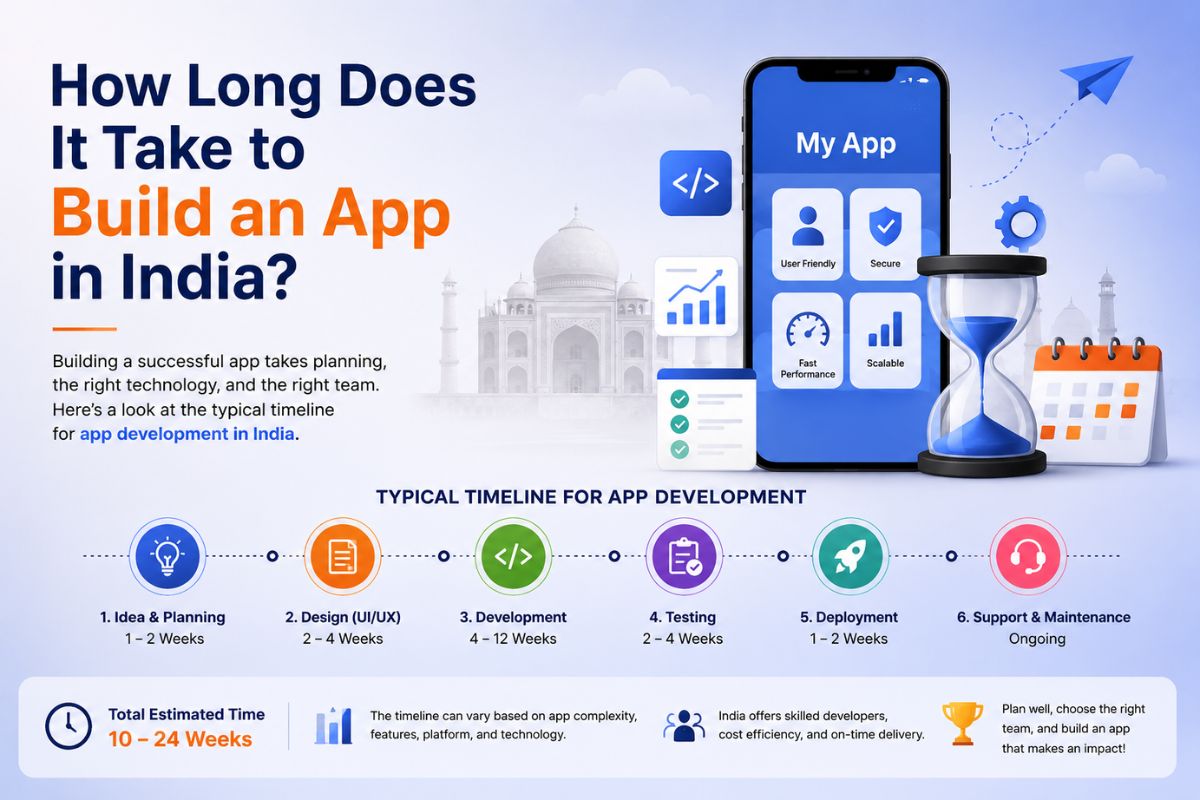
A simple application may take a few months, while medium and complex applications can require considerably more time. Features, testing, integrations, approvals, and changes during development can all affect the timeline.
Can Indian companies develop apps for international businesses?
Yes. Indian technology companies regularly work with businesses from different countries. Online collaboration tools, project management systems, documentation, and video meetings make international development partnerships practical.
Should I choose native or cross-platform app development?
It depends on the project. Native development can be appropriate when platform-specific performance and functionality are priorities, while cross-platform technologies such as Flutter and React Native can be useful when businesses want to target multiple platforms with a shared codebase.
Final Thoughts
Choosing a mobile app development partner should not be reduced to a comparison of hourly rates or development locations.
India has become a practical option for businesses because it brings together technical talent, modern development technologies, flexible engagement models, international collaboration, and competitive costs.
But the most important factor remains the development partner you choose.
Before signing a contract, discuss your requirements clearly, understand the proposed technology, ask about timelines, clarify ownership and maintenance, and make sure the company understands your business objective—not just the list of features.
If you are still at the idea or planning stage, starting with a conversation can be more valuable than immediately asking for a quotation. A clear understanding of the product can help you make better decisions about its technology, timeline, and budget.