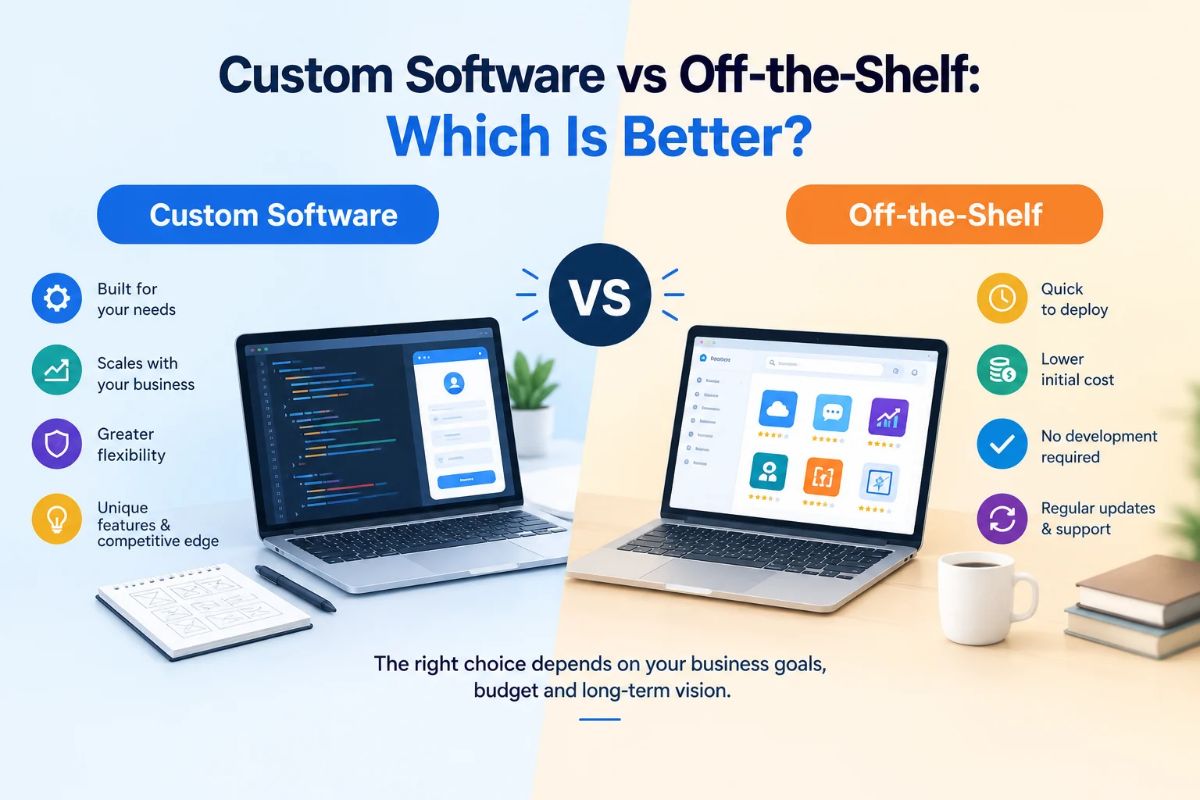
Running a business often means choosing between using tools that are already available and investing in technology built around your own requirements. A subscription-based application may help a team get started quickly, but its features, pricing, and integration options can become restrictive as operations expand. Software development services offer greater control over how systems work, although developing and maintaining them requires careful planning and investment. The right decision depends on more than the initial price or the number of available features. This blog examines how both options compare in terms of cost, flexibility, scalability, security, and long-term business value.
Custom Software vs. Subscription Tools: Key Differences
Both approaches can support business growth, but they address different needs.
1. Initial Investment and Long-Term Cost
Subscription software development services entail lower initial costs for organizations since they may start with an affordable package and ramp up their spending in case of substantial growth in users, features, etc. This works for small businesses and startups operating with tight budgets.
There is a worrying point, though – the recurring expenses accumulate. A company using several apps has to pay for different services such as sales, accounting, technical support, reporting and so on. Further expenses can stem from paid integrations, additional storage, and custom assistance.
On the contrary, custom software requires a bigger investment at the start because a company has to pay for the entire planning, design, coding, and implementation process. In addition, there are ongoing expenses associated with hosting, maintenance, and security updates.
The overall expenses in either case depend largely on the ways of software usage and support. A custom made solution may turn to be more enticing in terms of expenses if subscription fees turn out to be hefty, expensive custom integrations are needed, or the business needs a specific functionality.
What should businesses consider? Compare the total cost over three to five years rather than looking only at the initial price. Include subscription increases, additional licenses, integration charges, maintenance, and the cost of working around missing features.
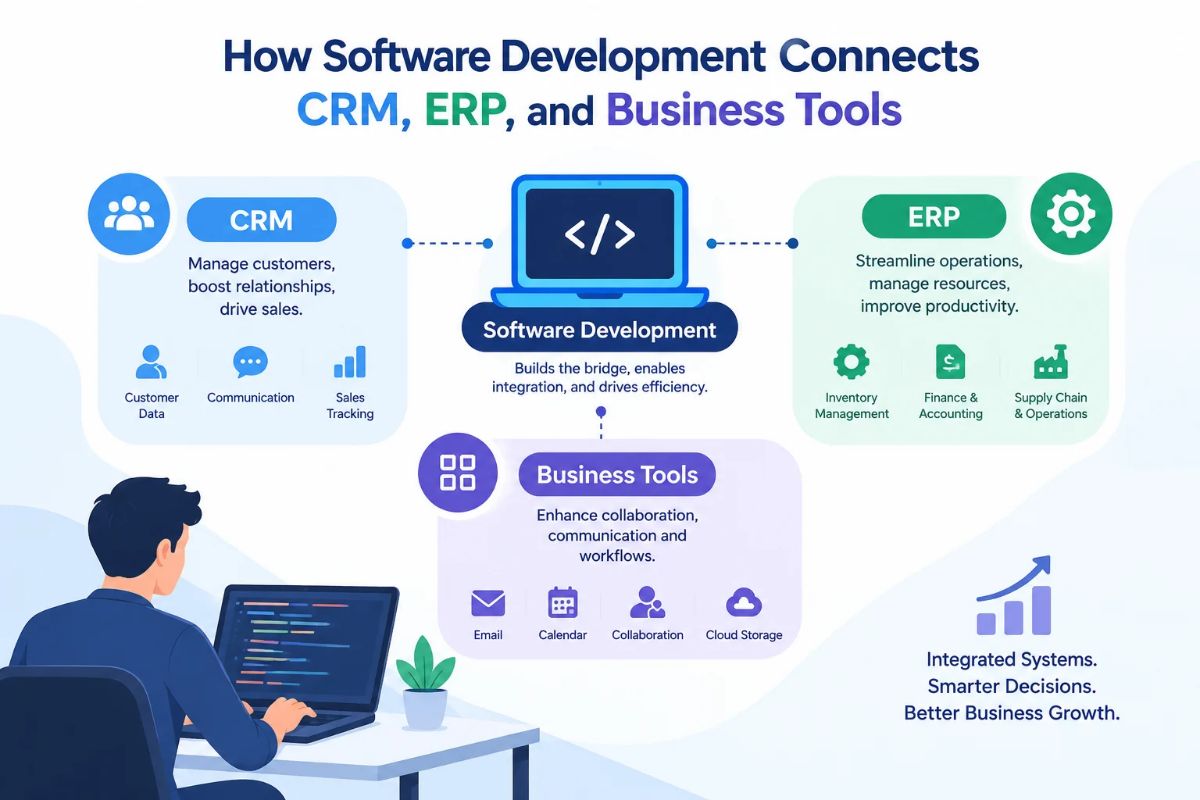
Also read: How Software Development Connects CRM, ERP, and Business Tools
2. Flexibility and Customization
Subscription-based solutions come with preset capabilities. Administrators may be able to tweak some settings, generate report templates, set up workflows, and select integration options, yet substantial adjustments are not always possible.
This seems to work when a company’s operations are in line with industry standards; however, issues may occur if the organization has specific practices that cannot be supported by a subscription vendor.
Custom-made software development services allows to gain more control over the capabilities and user experience. Development teams can implement unique approval procedures, dashboards, pricing schemes, or workflows according to the actual working processes of their employees.
For instance, a medical institution may be in need of an application that will be able to combine appointment scheduling with internal reporting and access to patients’ records. A custom app can be developed based on these requirements, following the regulations related to the healthcare field and data protection.
The key point to raise is whether the built application will bring value. Creating a separate tool for a process that can be performed effectively by a good subscription solution may result in unnecessary costs.
3. Scalability and Business Growth
A solution that suits ten workers might not be able to fulfill the requirements of a firm that has several divisions, numerous locations, and a big consumer base.
Cleverly designed subscription tools can meet a corporation’s growing needs by allowing businesses to add users, upgrade plans, or buy additional capacity. This can come in handy as long as the provider’s pricing remains conducive.
Custom software can be developed in accordance with future growth thanks to the right architecture and database planning, infrastructure choices, and integration strategies. The system can also adapt along with the company as its services or mode of operation change.
Nevertheless, custom development does not ensure scalability, on one hand. On the other hand, inappropriate architecture, poor testing, and lack of infrastructure planning might lead to problems with performance when usage increases. When choosing between available variants of solutions, businesses should compute expected transaction volumes, user activities, data storage volumes, and future integrations.
4. Integration With Existing Systems
The majority of companies utilize different applications to run daily routines. If these instruments do not communicate properly, employees will have to input the same data numerous times or use separate software that is out of sync.
Most subscription services offer predefined integrations with the best-known applications, support APIs, and allow the use other automation solutions. This type of functionality can ease installation a lot, but integration possibilities depend on the service and the subscription plan.
Custom programming is available for connecting companies’ databases, customers’ websites, payment systems, inventories, and third-party applications based on individual needs. Take for example eCommerce, which has got order management, warehouse control, delivery, and communication with customers based on separate solutions. The custom integration layer can synchronize relevant data and minimize the frequency of manual adjustments.
Checking possible connectivity through available APIs or ready-made integrations is essential for organizations before creating something new. Custom programming would be necessary only if there are no ready-made solutions that are capable of fulfilling business needs.
5. Data Security and Compliance
Security is determined by the way the information is collected, utilized, stored, authorized, transferred, and secured. Neither custom apps nor subscription ones automatically speak for themselves when it comes to security.
While subscription software could provide encryption, accessibility controls, backup, privacy monitoring, and compliance documents, the company must check which security measures are provided in the subscription and which responsibilities stay with the company.
Custom-made software provides the possibility to meet the security requirements of the system architecture. The created software could possibly have different security features embedded in it, such as controlled access, audit logs, and data protection.
Flexibility of the custom software is accompanied by its corresponding responsibilities. The company needs to make sure that the application is being maintained and tested to catch any new online threats.
Any organization that deals with bank account information, medical records, or other confidential customer data should take into account all legal standards, data processing agreements, hosting contracts, and incident response procedures beforehand.
6. Ownership and Vendor Dependence
Subscription tools depend on an external provider. The provider controls its product roadmap, pricing structure, service availability, and continued support. A price increase, discontinued feature, or change in terms may affect business operations.
Businesses should also understand what happens to their information if they cancel a subscription. Data-export options, migration support, and contract termination terms deserve attention before signing up.
Custom software offers greater control over development priorities and future changes, but ownership must be established contractually. Paying for development does not necessarily mean the business automatically owns every part of the source code or intellectual property.
The agreement should clarify ownership of the source code, rights to modify and distribute the software, third-party licenses, documentation, and access to development repositories.
A well-defined contract helps prevent disputes and reduces uncertainty if the business changes development partners later.
Can Businesses Combine Custom Software and Subscription Tools?
Yes. Many organizations benefit from a hybrid approach rather than choosing one option for every business function.
A company might use subscription software for accounting, payroll, email marketing, and document collaboration while investing in custom software for its core product, customer portal, or specialized operational workflows.
This approach keeps routine functions manageable while directing development resources toward areas where greater control creates measurable value.
For example, a manufacturing business could use a standard accounting application alongside a custom production management system. The two could exchange approved information through APIs, reducing duplicate data entry without requiring the company to rebuild its financial software.
A hybrid setup still requires planning. Businesses should evaluate integration reliability, data consistency, access permissions, maintenance responsibilities, and what happens if a third-party provider changes its API or pricing.
The goal is to create a connected technology environment in which every application serves a defined purpose.
How to Make the Right Decision for Your Business
Before selecting a solution, assess your requirements against practical business considerations.
Identify Your Most Important Requirements
List the tasks the software must perform, the people who will use it, and the problems it should solve. Separate essential features from those that would simply be convenient.
This prevents businesses from paying for unnecessary functionality or overlooking requirements that affect daily operations.
Calculate the Total Cost of Ownership
Compare implementation costs, subscription fees, infrastructure, integrations, maintenance, training, and future upgrades. Include the time employees spend on manual workarounds, as this can represent a significant operational expense.
Evaluate Future Requirements
Consider how the business may change over the next three to five years. New locations, additional users, higher transaction volumes, and new services may influence which solution remains practical.
Avoid overengineering for hypothetical needs, but do not ignore growth that is already part of the business plan.
Review Technical and Operational Risks
Check security requirements, integration dependencies, vendor reliability, support arrangements, and data migration options. For custom projects, assess the development team’s experience, maintenance plan, and documentation practices.
Measure the Expected Business Benefits
Define how success will be evaluated. Useful measures may include reduced processing time, fewer manual errors, lower administrative costs, faster customer response, or improved reporting accuracy.
These measures help determine whether an investment delivers enough value to justify its cost.
Conclusion
Choosing between custom software and subscription tools depends on your business needs, budget, and long-term goals. While subscription tools offer convenience and quick implementation, custom software provides greater flexibility for specialized workflows and business growth. Devherds offers tailored software development services to help businesses choose the right approach and build solutions that improve efficiency and support their objectives.
Not sure where to start? Book your free 30-minute strategy call with us to discuss your requirements, explore suitable technologies, and get expert guidance on your next steps. Connect with us today to plan a software solution that fits your business.