Corporate agility relies on sophisticated digital infrastructure, shifting mobile technology from a basic utility into a core pillar of operational strategy. Modern enterprises face ongoing demands to modernize internal workflows and elevate user experiences across varied digital touchpoints. Designing and launching secure, high-performance software systems requires dedicated technical engineering, prompting many organizations to build custom solutions alongside a premier mobile app development company in US. This comprehensive guide examines the primary operational advantages, measurable financial returns, and strategic architectural benefits that enterprise mobile solutions deliver to modern corporations.
1. The Shifting Paradigm of US Enterprise Mobility
The American corporate scene has transformed drastically over the past ten years. Workplace mobility is no longer just about basic messaging apps or mobile-friendly email inboxes. Modern companies now require heavily customized software capable of managing heavy operational loads, protecting sensitive data, and delivering a buttery-smooth experience for remote teams and everyday users.
The Evolution from Utility to Core Strategy
Early business apps were mostly built to digitize paper files and handle simple back-office chores. Nowadays, mobile applications act as the central nervous system for everyday leadership choices. Management teams rely on live data feeds, built-in CRM platforms, and scheduling dashboards straight from their phones. This means department heads can sign off on transactions, track performance numbers, and put out customer fires from literally anywhere.
Driving Market Competitiveness in American Industries
In high-stakes fields like finance, healthcare, supply chain logistics, and retail, digital speed often dictates who wins the market. Companies stuck using clunky desktop software constantly run into friction that slows down customer acquisition and stalls internal communication. Swapping those out for responsive mobile setups eliminates those operational bottlenecks. Equipping field reps and executives with fast, reliable tools gives a company the kind of edge that naturally drives up customer retention.
2. Core Business Benefits of Custom Enterprise Mobile Solutions
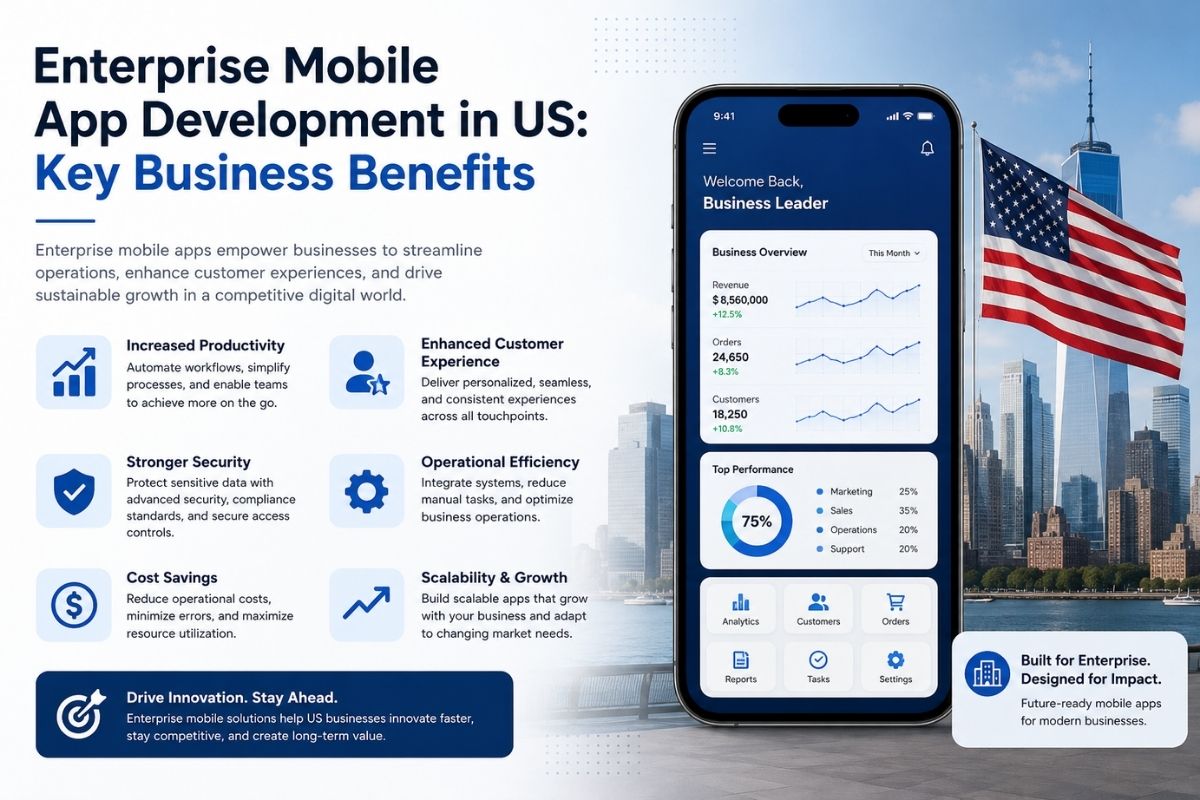
Investing in tailored mobile software delivers concrete payoffs across an entire organization. Generic programs force staff to twist their daily routines around rigid software limits. Custom builds, however, fit right into specific company goals and operational habits.
Streamlining Internal Operations and Workflow Efficiency
Operational friction burns through billions of dollars in lost productivity every year. Custom enterprise apps attack these exact trouble spots by cutting out repetitive tasks, gathering communication into one place, and giving staff instant access to necessary files. Imagine a field technician updating project statuses, pulling client history, and firing off invoices right from a tablet screen, no manual paperwork required. To pull off this kind of operational precision, organizations frequently team up with a mobile app development company in the US to craft these custom internal frameworks from scratch.
Elevating Employee Engagement and Productivity
Remote and hybrid setups have completely rewritten the rules of the traditional workplace. Enterprise mobility keeps distributed teams tied together by providing a shared digital hub. Secure chat channels, live document editing, and smart push notifications keep everybody on the same page regardless of time zones. When staff members have fast, intuitive tools at their disposal, daily frustration drops, morale climbs, and overall output naturally increases.
Enhancing Data Security and Regulatory Compliance
Keeping company files secure matters immensely to management. Standard software packages often create vulnerabilities through cheap add-ons or weak code. Writing custom programs lets developers build protection straight into the foundation. Features like login verification, user access limits, and data scrambling keep private corporate assets safe from hackers while satisfying official industry rules.
3. Key Features Required in Modern Enterprise Applications
Building software that stands up to heavy enterprise use requires careful blueprinting and technical foresight to guarantee long-term stability and user adoption.
Scalable Architecture and Cloud Integration
Enterprise apps have to weather massive spikes in traffic and data processing without choking. Today’s solutions lean on cloud-native backend structures that scale up or down automatically depending on live demand. Tying systems into cloud giants like AWS, Azure, or Google Cloud guarantees that database queries happen instantly and updates push through seamlessly across every employee’s device. When tackling heavy setups like these, partnering with an established mobile app development company in the US guarantees your cloud infrastructure is built to last.
Intuitive User Experience (UX) and Design Thinking
An app can be a technical masterpiece, but if the interface feels like a maze, nobody will use it. Enterprise UX focuses on keeping interactions simple, cutting down unnecessary taps, and laying out messy data into clean, readable dashboards. Through real user testing and smart layout choices, companies ensure their teams and clients actually want to open the app every day.
Advanced Analytics and Real-Time Reporting
Smart decision-making demands clean, instant data. Modern enterprise tools feature built-in analytics engines that track user habits, monitor app speeds, and spit out automated operational reports. Executive dashboards display clear performance indicators, making it easy for managers to catch emerging trends, spot operational waste, and pivot strategies early.
4. Overcoming Implementation Challenges in Enterprise Mobility
While the upside of enterprise mobility is massive, the rollout phase can introduce hurdles that require steady hands and careful planning.
Managing Legacy System Integration
Most established enterprises rely on aging software databases built decades ago. Trying to wire modern mobile apps into legacy systems often triggers data sync errors and unexpected downtime. A clean launch requires building secure APIs and custom middleware that bridge old tech with modern cloud environments without freezing daily business routines.
Balancing Cost, Scope, and Time-to-Market
Budget blowouts and feature creep plague large tech projects. Teams have to lock down clear milestones, lean on agile development methods, and keep communication tight with their engineering partners. To keep development on schedule and within budget, leadership teams frequently retain a trusted mobile app development company in the US to steer the project lifecycle from day one.
Ensuring Cross-Platform Consistency
With employees logging into enterprise software from iPhones, Android tablets, laptops, and desktop monitors, keeping the interface feeling identical across every screen is essential. Utilizing modern cross-platform frameworks lets engineering teams write unified code while holding onto native device speeds, cutting down future maintenance headaches and launch delays.
5. Measuring Return on Investment (ROI) in Mobile Technology
Figuring out the financial return of a major mobile project means looking past the initial build sheet to measure long-term savings and revenue growth.
Quantifying Cost Reductions and Time Savings
The payback on an enterprise app usually shows up in hours saved and mistakes avoided. For instance, slashing manual data entry errors by a fraction or trimming two hours off a technician’s daily service route turns straight into labor savings. Tracking these shifts gives management undeniable proof of value.
Evaluating Revenue Growth and Customer Lifetime Value
For customer-facing enterprise apps, success shows up in signup velocity, transaction volume, and retention rates. A streamlined mobile service portal cuts down customer drop-off, encourages repeat business, and boosts overall customer lifetime value through friction-free digital experiences.
Conclusion
Enterprise mobility has officially shifted from an experimental tech project into an absolute must-have for modern market success. By cleaning up internal workflows and sharpening user touchpoints, custom mobile architecture helps American businesses scale efficiently in a crowded global market. Reaching those goals takes a sharp strategy and rock-solid technical execution.
If your organization is ready to upgrade its digital foundation and scale operations using custom software, Devherds delivers sharp technical engineering designed to turn complex business goals into high-performing digital realities. Reach out to our engineering team today to set up an enterprise consultation and see how we can accelerate your digital rollout.