Before a single line of code gets written, software projects can easily run into trouble. Most of these early hiccups do not stem from bad intent, but from simple miscommunication; things like confusing pricing models, missed target dates, hazy obligations, or ill-defined feature sets.
The main goal of a software development proposal is to bring clarity and build a shared understanding between your company and a vendor before any legal agreement gets locked in. That said, simply having a polished, multi-page document sitting on your desk does not guarantee you will actually benefit from the proposed terms.
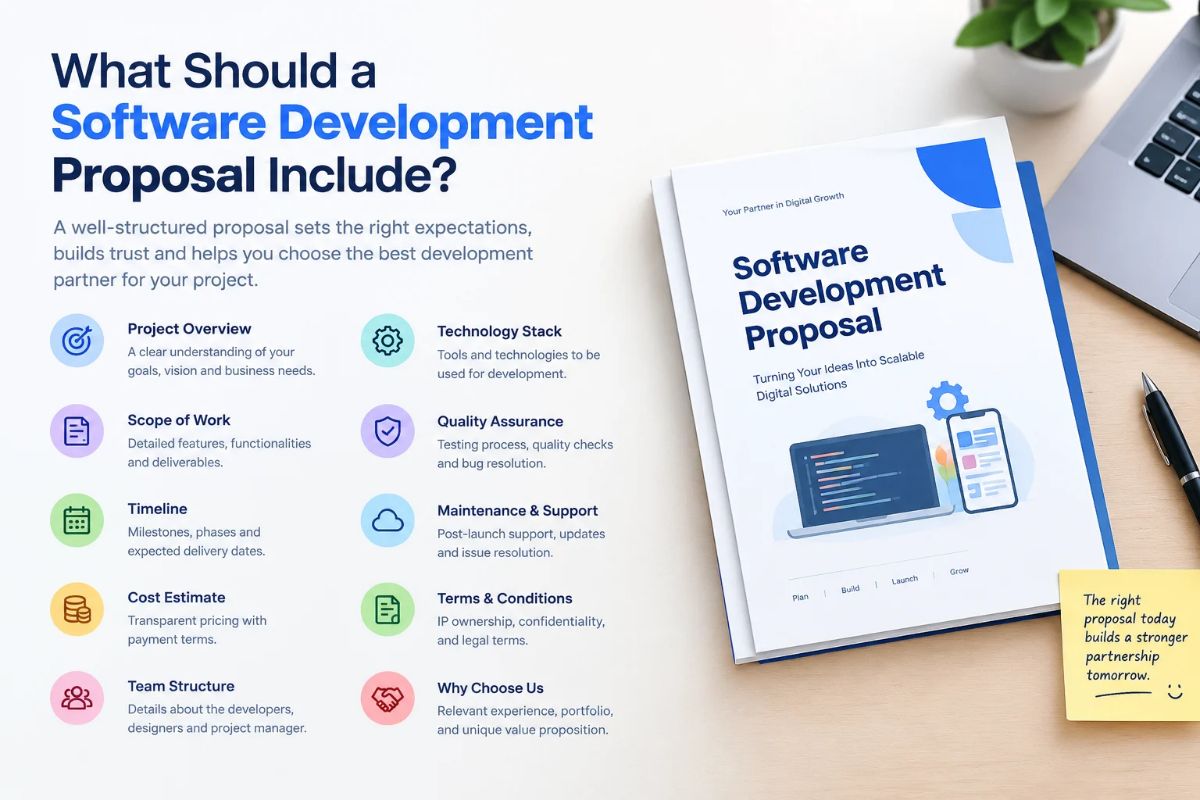
In this guide, we will walk through the core ingredients every solid software proposal needs to contain; from project scope and pricing to delivery schedules, security, ownership rights, and long-term support, so you can evaluate your vendor’s offer with total confidence before signing.
1. Project Objectives and Core Business Requirements
Every planned proposal for software from the system should begin with the identification of the request’s primary aim and the particular issues the business is willing to solve. The rationale for this is that it is necessary for both the team of company internal professionals and the workers of the software company to have the same vision from day one of the project.
A good proposal is expected to offer the information about the target audience of the business, what kinds of activities have to be conducted on an immediate basis, and what results are expected in the future. For instance, if the company is going for the development of its customized inventory management system, the first and foremost objectives would be minimizing mistakes while entering information manually, obtaining the possibility of monitoring the stock at every moment, and ensuring the proper fulfillment of orders.
2. Project Scope and Functional Specifications
The scope section acts as the primary blueprint for your custom application. By laying out precisely what the engineering team will deliver, you protect your project budget and timeline from scope creep and unexpected extra bills.
Core Features and Workflows
The document must clearly detail essential features, user roles, system workflows, and third-party integrations. For example, a new mobile app might require user registration, payment processing, push notification services, in-app search, and an admin dashboard. Every single feature needs a plain-language explanation of how it is supposed to work in practice.
Inclusions vs. Exclusions
It is just as important for the proposal to clarify what the quoted price covers and what sits strictly outside the scope, such as future feature additions, recurring software subscriptions, asset creation, or extra system integrations. Establishing these boundaries early on helps businesses plan for extra expenses and documents essential assumptions before development begins.
3. Tangible Deliverables and Intellectual Property Rights
A complete proposal lists all the specific deliverables you will receive throughout the build. This generally covers the underlying source code, UI/UX design files, technical architecture diagrams, testing logs, deployment scripts, and user guides. It should also outline a clear handover timeline along with all access credentials needed to run the system independently.
Clarifying Source Code Ownership
Outsourcing software development does not imply that your business receives ownership of all intellectual properties. Make it clear in your proposal and contract that after the payment, the ownership of customized code, artwork, and documentation will be assigned to your business.
At the same time, make sure that your customized codes are separated from those created before, open-source software materials, and programs with special licenses. You should make sure that you have clarified these legal issues before signing to avoid turning into a hostage of the software developer in the future.
4. Realistic Timelines and Delivery Milestones
A realistic project schedule lets your company plan marketing launches, line up internal resources, and coordinate day-to-day operations. Instead of handing you a single, vague target completion date, a solid proposal explains how the work will unfold through structured phases.
A standard project lifecycle usually includes:
- Requirements analysis and project setup
- UI/UX design approvals and interactive prototypes
- Core software development and integration work
- Quality assurance, bug fixing, and user acceptance testing
- Final deployment, handover, and system launch
Each major milestone ought to feature an estimated target date, a clear deliverable, and an expected sign-off window from your side.
Additionally, the proposal should address external dependencies that could nudge the schedule, such as delayed feedback, missing API credentials, or incomplete business documentation. Make sure to ask how schedule changes will be handled and approved if unforeseen technical obstacles pop up along the way.
5. Development Costs and Flexible Payment Terms
The finance-related part of the plan should provide information regarding the investment amount, what services will be provided, and when exactly there is a need to pay for other services. Well-organized companies always think about the general investment amount rather than just going for a low-cost software development firm.
The plan should also contain information about payment plans, taxes, charges of external companies, and costs that need payment regularly for hosting, APIs, and software licenses.
Navigating Common Pricing Models
- Fixed-Price Model: You and the vendor agree on a flat fee for a strictly defined scope. This makes budgeting straightforward when your project requirements are fully locked in and unlikely to shift.
- Time-and-Materials (T&M) Model: You pay for the actual development hours and resources spent on the project. This offers great flexibility for evolving products, though it requires regular progress tracking and active budget oversight.
- Dedicated Development Team: You hire an entire squad of engineers dedicated to your project over an agreed timeframe. This setup suits companies that need continuous development support or expect their feature list to adapt over time.
Before signing, double-check how scope adjustments, extra feature requests, or approval delays will impact your final balance sheet. Payment milestones ought to be tied to clear, verifiable deliverables so everyone knows when invoices become due.
6. Technology Stack and System Integration Plans
The technology stack defined in your proposal has an impact on the performance and scalability of the software you are planning to build. This section should define what technologies will be used in the process of creating the software in question and why these technologies were selected. Based on the type of application being created, this section will provide information about programming languages, server-side frameworks, database systems, cloud technologies, and external libraries/apis to be used.
The system integration issues should be properly addressed as well. If your application needs to integrate with another system (CRM, ERP, payment gateway, etc.), this should also be clearly defined in the proposal and explained how difficult and costly it will be to implement. Do not forget to check if the architecture designed by you can meet the future requirements of your company. An architecture designed for small number of users may need to be modified once it is used by large audience and will require expensive changes.
7. Security Provisions and Data Privacy Standards
Long before work even begins on a software project, the related security protocols must be established, especially when the software deals with money transactions, customer information, employee records or other vital jealously protected company data. The document at hand should indicate what security measures are required based on the type of risks your project is likely to face in terms of security.
Commonly, these include data encryption techniques (both in movement and in storance), role authorization, secure authentication, API security, backup features, and vulnerability analysis. Moreover, it is essential to define the obligations connected to data privacy issues. The company must be aware of how the personal data is being collected, processed, stored, and then destroyed in compliance with industry standards and laws on data privacy. In any case when access to confidential data of the customers is required, the contract should contain strict requirements related to confidentiality concerning this information.
8. Quality Assurance, Testing, and Acceptance Criteria
Rigorous quality testing makes sure your software actually does what it is supposed to do without breaking. The proposal should clearly list the planned QA activities, covering functional testing, integration checks, stress testing, security audits, and cross-browser or cross-device compatibility checks.
Defining Your Acceptance Criteria
Acceptance criteria specify the exact conditions a deliverable must meet before your team signs off on it. For example, an online booking system must process test payments, trigger instant confirmation emails, and update inventory counts accurately before it gets approved.
The document should map out the review window, bug-reporting steps, fix turnarounds, and final approval workflows. Clear acceptance criteria remove ambiguity around when a feature is truly finished and prevent confusion between resolving software bugs versus requesting brand-new features.
9. Post-Launch Support and Ongoing Maintenance
Software development does not usually conclude on the day an application is released. Use of new software in everyday tasks indicate that the app needs constant bug fixing, adjustments in performance, secure changes, updates of the OS and more. Check in the documents whether the cost of post-launch support is included in the cost of your project or it is offered as a separate plan.
Make sure to check warranty periods for post-launch bug fixing processes, modes of communication, guaranteed time of response, costs of maintenance services etc. Be sure to learn who is responsible for managing server hosting, conducting database backups and responding to emergency incidents after app deployment. Making a clear distinction between things related to bug fixing in the delivered product and processes need to create new features helps to keep future maintenance costs under control, thus making sure that the application does not need any major repairs.
Conclusion
An excellent software development proposal does not only present the costs involved, but also helps to clarify the expectations, enables to secure the financial investment, and avoids any confusion before the project starts. By thoroughly evaluating the scope of the project and support processes, you will acquire the necessary knowledge to make an informed choice regarding your company. Choosing the right development team is as crucial as reading through the business offer carefully. Devherds specializes in the development of customized software solutions required by your organization throughout the whole cycle from the idea to the full process of development and testing. You can also book a free 30-minute consultation with our experts to discuss the main objectives of your project, analyze your needs, and assess the development options of your product.