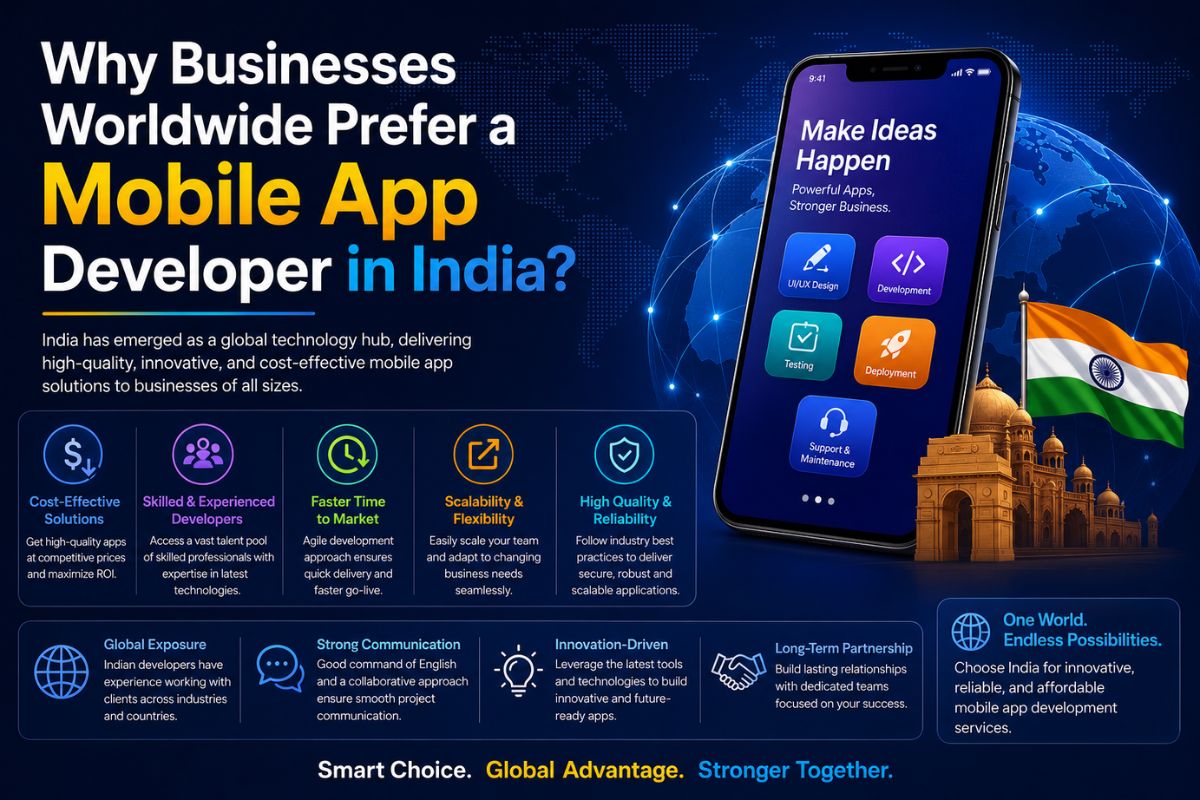
When you are looking to build a mobile application, you don’t have to limit your search to local tech teams anymore. Global outsourcing has made it incredibly easy to work across borders, and hiring a mobile app developer in India has become the top choice for companies that want strong technical expertise as well as cost efficiency.
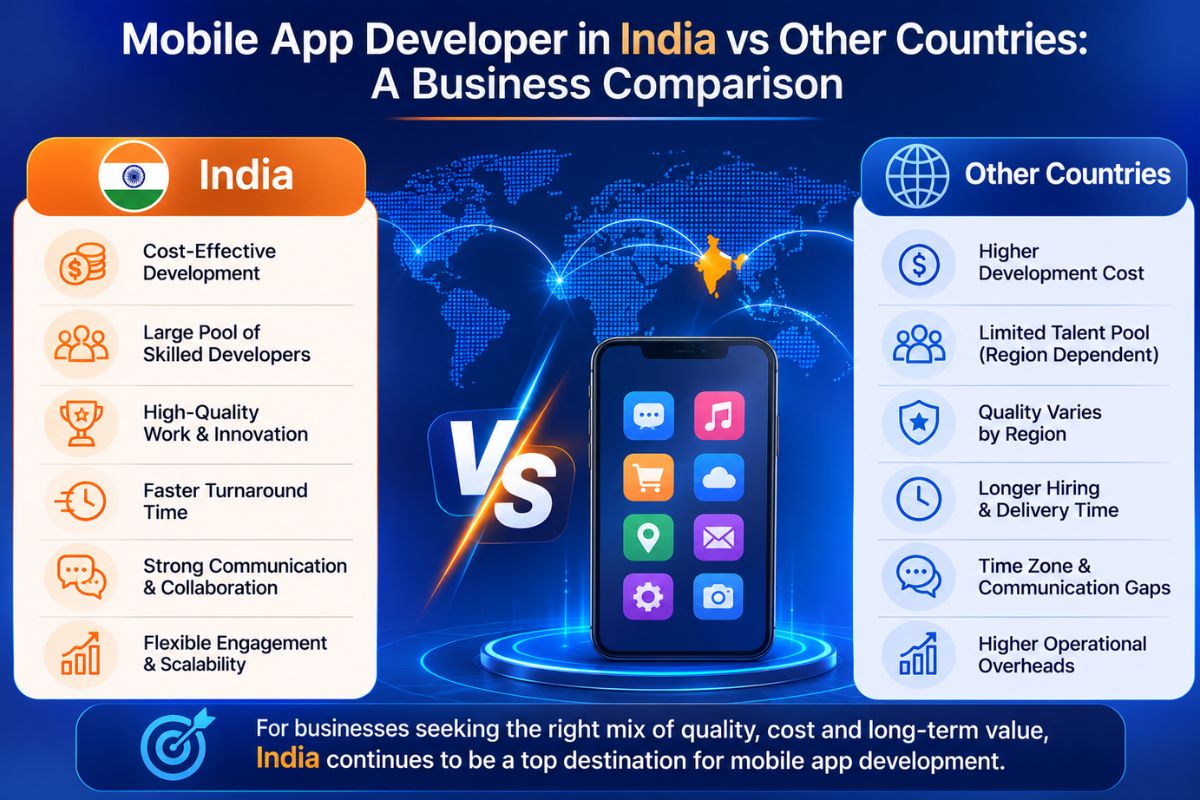
We know businesses also look closely at regions like the US, the UK, Eastern Europe, and the Philippines, and honestly, every hub has its own unique strengths. But picking the right destination requires a much closer look than just comparing hourly rates.
As a team operating right out of this space, we want to give you a transparent look at how India stacks up against these other major tech hubs. This guide breaks down the actual factors that matter so you can make the absolute best choice for your digital project.
Deconstructing the Major Global Outsourcing Hubs
To make an informed choice, you need to understand the distinct profiles of the world’s leading software engineering markets. Let’s look closely at how the top regions operate.
The United States and United Kingdom (Onshore & Nearshore)
Domestic development in the US and UK offers the highest level of cultural alignment and zero time-zone gaps for Western businesses. Companies working within these markets enjoy shared legal frameworks and immediate communication.
However, these benefits come at a premium. The hourly rates here are the highest in the world, ranging from 150 to 250 dollars or more per hour. This massive expense often makes full-scale product development prohibitive for startups and mid-sized enterprises. Furthermore, localized talent scarcity means finding available senior engineers can take months.
Eastern Europe (Poland, Ukraine, Romania)
Eastern Europe has built a strong reputation for high-quality technical education and solid engineering capabilities. Regionally, countries like Poland and Romania align closely with Western European working hours and offer strong English proficiency.
The primary drawback here is that average rates have climbed steadily to between 50 and 100 dollars per hour as the region integrates more deeply with the European Union. While still more affordable than the US or UK, it is no longer a low-cost option. Additionally, businesses must navigate occasional regional instability that introduces structural risks.
The Philippines (Southeast Asia)
The Philippines is a massive player in the business process outsourcing space, offering highly fluid communication, excellent English skills, and great cultural fit. With rates running from 25 to 50 dollars per hour, it represents a highly budget-focused tier.
However, the main risk remains a limited pool of deep, complex architectural talent. While it is an excellent destination for customer support or basic administrative tasks, the local ecosystem is still developing when it comes to highly specialized engineering for advanced mobile products.
India (South Asia)
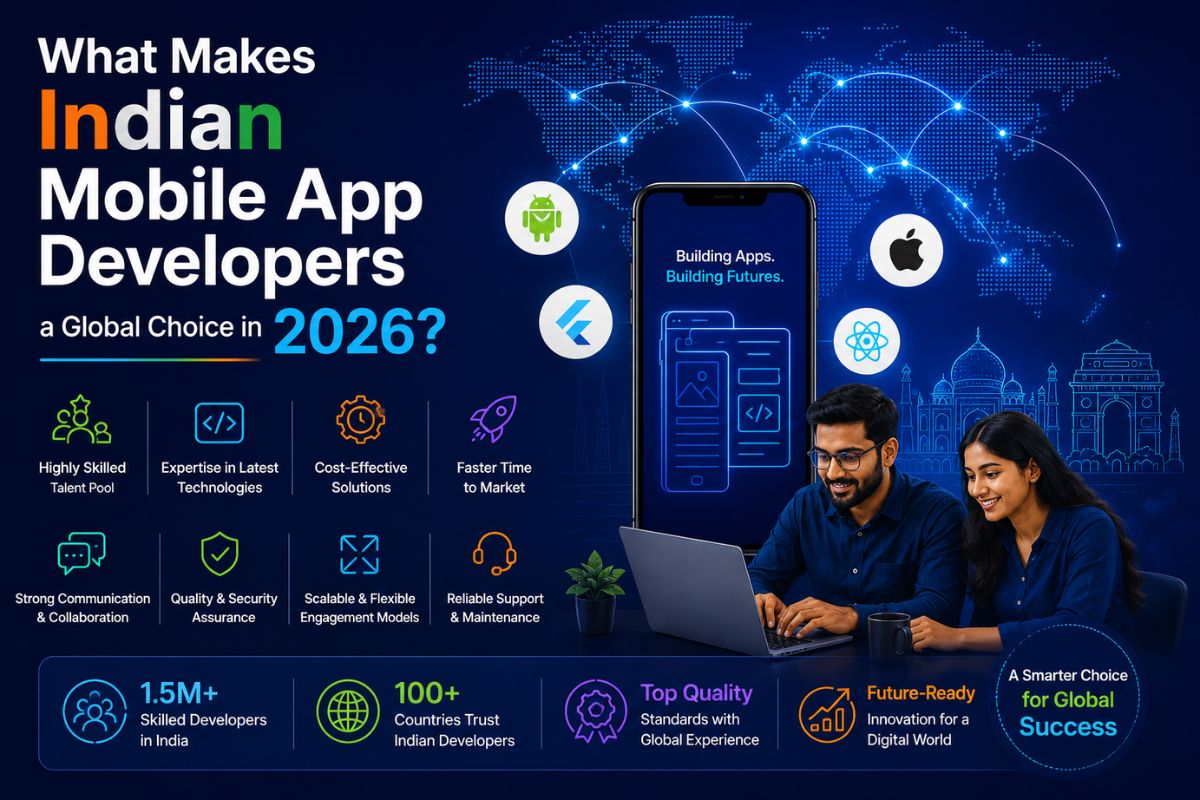
India stands as the largest software exporter globally, delivering massive talent scalability and high technical expertise. Positioned optimally between 30 and 70 dollars per hour, this market produces hundreds of thousands of engineering graduates annually from a vast network of technical universities.
Historically viewed purely as a cost-saving destination, that narrative has completely evolved. Western brands look to the region to tap into senior architectural talent and deep experience across emerging technologies. The primary factor for businesses to manage here is vetting the variance in quality among different local vendors to find the right engineering partner.
Technical Expertise and Talent Pool Depth
When you build a mobile product, the depth of the engineering team’s knowledge determines whether your app succeeds or crashes on launch day.
Scale and Specialization
The sheer volume of tech professionals in India creates a unique market dynamic where developers must specialize to stand out. Whether your project requires native Swift and Kotlin development, or cross-platform frameworks like Flutter and React Native, you can easily find dedicated experts.
If your application demands advanced integrations, such as machine learning models running locally on smartphones, complex fintech payment systems, or heavy IoT data syncing, the local ecosystem has engineers who have built similar systems at scale. In smaller outsourcing regions, finding niche specialists often means waiting weeks for recruitment or paying exorbitant premiums.
Educational Foundation and Adaptability
The technical framework in India heavily emphasizes mathematics, analytical problem-solving, and computer science fundamentals. This foundational training makes engineers highly adaptable, meaning the learning curve is remarkably short when new operating system updates roll out or new development tools emerge.
Furthermore, because local tech companies work with global clients across every industry imaginable, from healthcare in the EU to logistics in the US, their engineering teams inherently understand different compliance standards, user experience expectations, and diverse business models.
Analyzing the Financial Realities of App Development
Let’s look at the financial aspects directly. App development is a significant investment, and maximizing the value of your budget is crucial.
Beyond Hourly Rates: The Real Cost of Value
Looking only at the hourly rate is a massive trap. A low price tag means nothing if a team takes twice as many hours to write messy code that requires a complete rewrite a year later. True cost efficiency means getting clean, scalable, production-ready code on an optimized timeline.
Choosing to hire a mobile app developer in India allows businesses to optimize their capital layout effectively. If you build a minimum viable product (MVP) in the US, your entire seed funding round might disappear into the initial launch phase.
Budget Allocation and Product Runway
By working with an Indian partner, you dramatically extend your financial runway. The money saved on core development can be directly reallocated into user acquisition, marketing, product design, and post-launch feature iterations. This strategic distribution of funds significantly increases a digital product’s overall chances of survival in a highly competitive market.
Overcoming Collaboration Hurdles: Time Zones and Communication
The two most common concerns businesses express about international outsourcing are communication barriers and overlapping working hours. Let’s break down how these function in practice.
Time Zone Management as a Strategic Tool
Many companies view a 9-to-12-hour time difference as a pure obstacle. Progressive businesses, however, turn it into a round-the-clock development cycle.
When your in-house team in the West finishes their workday and logs off, the development team in India takes over. Code is written, tested, and deployed overnight. When the Western team logs back in the next morning, the updates are ready for review. This continuous cycle cuts total product development time significantly compared to standard local schedules.
Professional Communication Standards
Language proficiency is a vital factor for smooth project execution. India has the second-largest English-speaking population in the world, and the entire tech ecosystem runs strictly in English.
Modern development agencies place immense emphasis on communication soft skills. Engineers don’t just write code silently; they actively participate in agile ceremonies, utilize Slack and Microsoft Teams effectively, and document their progress clearly using tools like Jira and Confluence to ensure absolute transparency.
Evaluating Project Reliability and Delivery Methodologies
A successful app launch requires strict adherence to timelines, robust quality assurance, and predictable project management.
Agile Adoption and Modern Workflows
The Indian software industry has fully mature project management practices. Reputable development companies do not operate on vague promises; they run on structured Agile frameworks, breaking down long-term product roadmaps into clear two-week sprints.
Clients receive regular product demos, clear burn-down charts, and constant updates. This structured approach ensures that project scopes do not drift out of control and that final deliverables match the initial business requirements perfectly.
Quality Assurance Ecosystems
Developing an app involves far more than just writing code. Testing it across hundreds of different smartphone models, screen resolutions, and operating system versions is equally critical. Indian tech firms possess extensive quality assurance (QA) infrastructures, utilizing automated testing suites alongside manual device labs to verify that your application runs smoothly under low network conditions, varying battery levels, and intense user loads.
Conclusion
Finding a balance between top-tier software engineering and smart financial management is the ultimate goal of any modern product team. If you are looking for a development partner that combines technical excellence with absolutely transparent execution, Devherds is built exactly for you.
We cut out the fluff, the rigid corporate layers, and the hidden costs that slow down product development. Our engineering teams specialize in building high-performance mobile applications tailored precisely to your strategic business goals. We don’t just write lines of code; we partner with you to turn complex product visions into secure and user-centric digital realities that scale seamlessly. Contact us to schedule a direct technical consultation and start building your digital future on a foundation designed to last.