Mobile apps are undergoing a quiet structural rewrite. For years, software followed a predictable script: a user tapped a button, and the app executed a hardcoded command. If artificial intelligence was involved at all, it was usually bolted on as an afterthought, a basic chatbot or a surface-level recommendation widget. That model is no longer enough. The shift toward AI-native development means building applications where machine learning forms the core architecture, not just the features. These platforms don’t wait for manual inputs; they actively adapt to user behavior and handle complex data processing instantly. Sticking to legacy development frameworks risks leaving businesses behind as user expectations pivot toward smarter, automated digital experiences.
Here is a look at what separates truly AI-native applications from legacy software, the core infrastructure required to build them, and the strategic hurdles companies must clear to manage this transition successfully.
What Are AI-Native Mobile Apps?
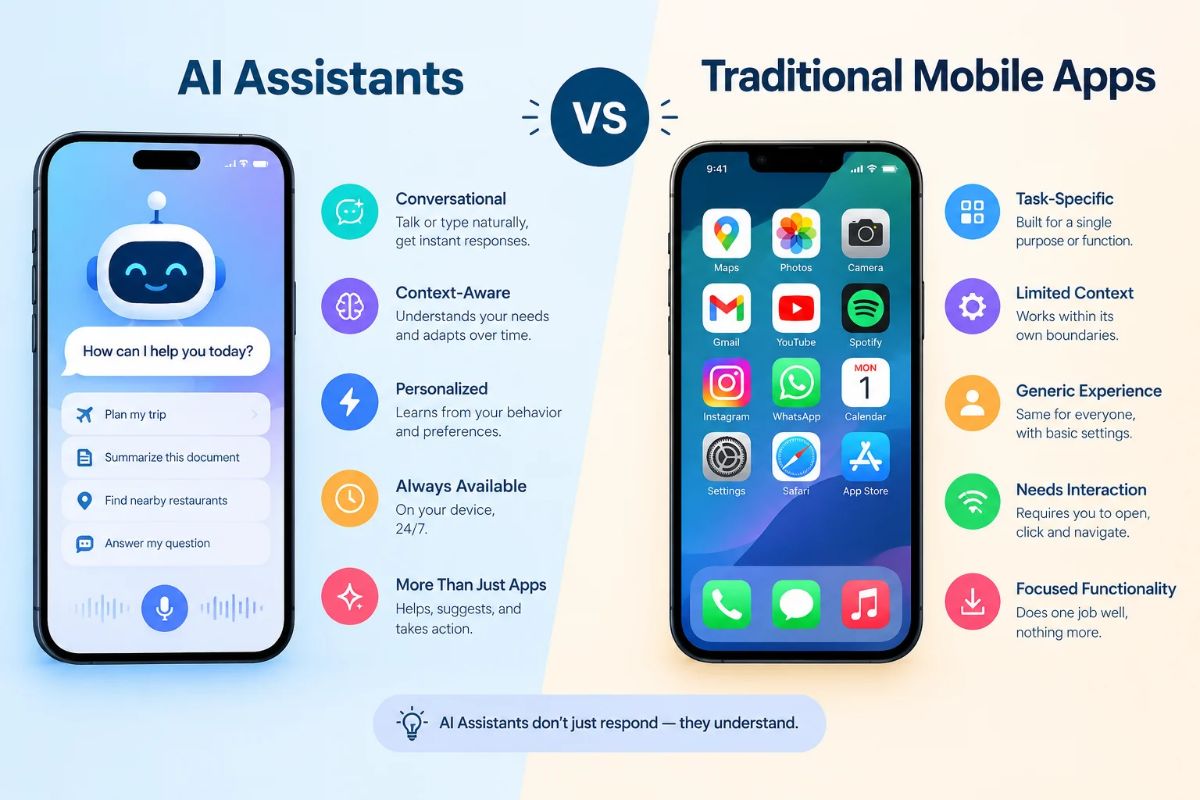
Artificial intelligence has become a core component of modern application development. Unlike traditional mobile apps that rely on predefined workflows, AI-native applications are designed around intelligence. They collect data, learn from user interactions, and improve their performance over time.
Instead of waiting for users to complete every step manually, these applications can predict actions, personalize experiences, and automate routine tasks. The result is a smarter application that becomes more useful with continued usage.
Traditional apps follow fixed programming logic. AI-native apps combine that logic with machine learning, natural language processing, and predictive analytics to make better decisions while the application is running.
Traditional Mobile Apps vs AI-Native Mobile Apps
Although both serve users through smartphones, the way they function is very different.
Traditional Mobile Apps
Traditional applications operate according to rules written by developers. Every feature behaves in a predefined manner, and any improvements require software updates.
Common characteristics include:
- Static workflows
- Limited personalization
- Manual user input
- Rule-based automation
- Regular updates for feature improvements
These applications perform well when user requirements remain predictable.
AI-Native Mobile Apps
AI-native applications continuously analyze information and adjust their responses based on user behavior.
Their capabilities include:
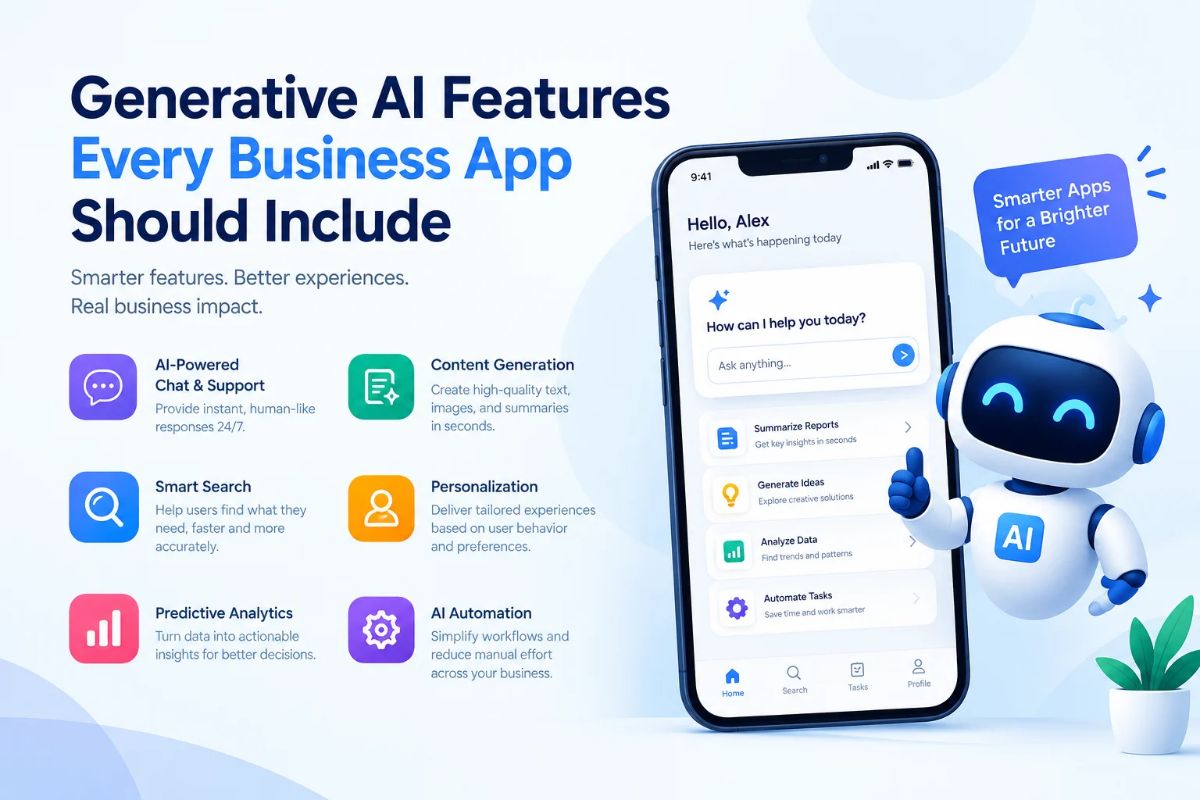
- Personalized recommendations
- Intelligent search
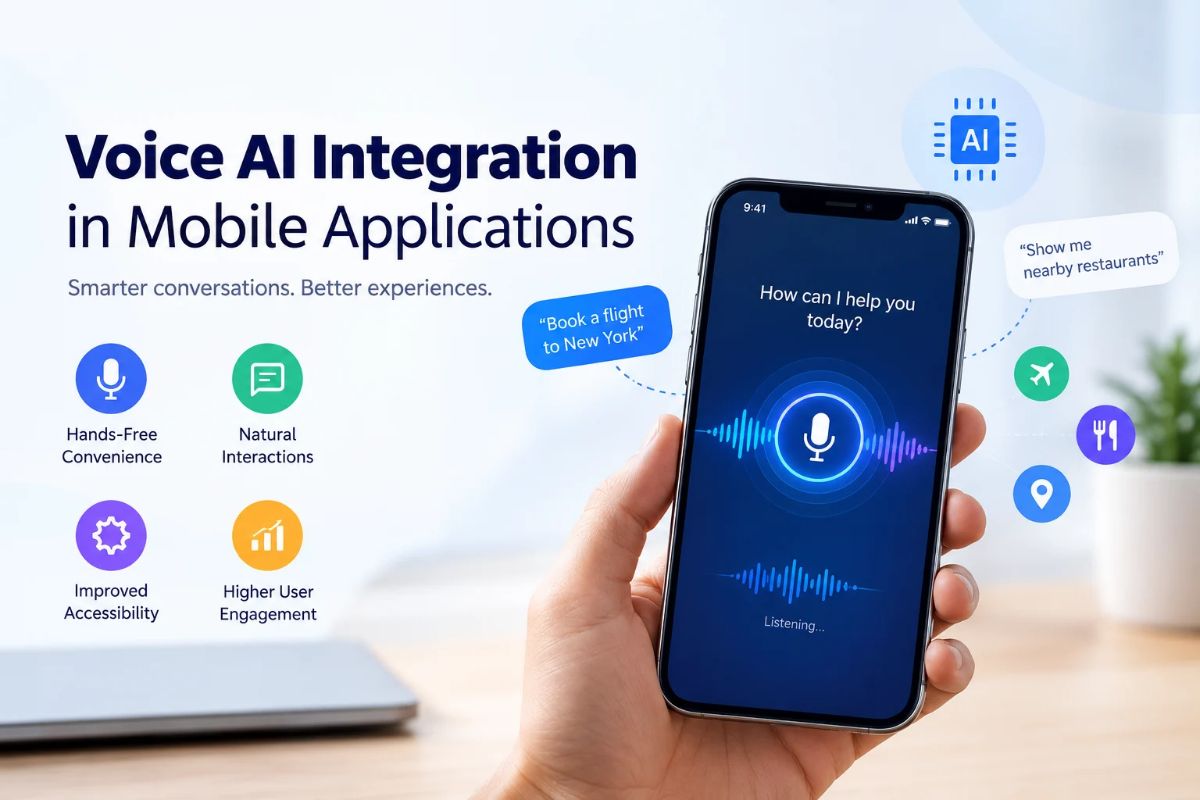
- Voice interactions
- Predictive suggestions
- Automated decision-making
- Continuous learning
Rather than remaining static, these applications improve as more data becomes available.
Why Are Businesses Moving Toward AI-Native Applications?
Customer expectations continue to increase. People want applications that understand their preferences, reduce manual effort, and provide faster solutions. Businesses are adopting AI-native development because it helps deliver these expectations while improving operational efficiency.
Better User Experience
Every customer interacts with an application differently. AI analyzes browsing habits, purchase history, and engagement patterns to deliver personalized experiences instead of generic interfaces. Users receive content, products, and recommendations that match their interests, increasing overall satisfaction.
Smarter Business Decisions
AI processes large amounts of information much faster than manual analysis. Business owners can identify customer preferences, recognize purchasing trends, and make informed decisions using real-time insights.
Higher Customer Retention
Applications that adapt to user behavior encourage longer engagement. Personalized experiences create stronger relationships with customers, leading to higher retention rates and increased loyalty.
Improved Operational Efficiency
Routine activities such as customer support, appointment scheduling, document processing, and notifications can be automated. This allows employees to focus on strategic tasks rather than repetitive work.
Core Technologies Behind AI-Native Mobile Apps
Several technologies work together to make intelligent applications possible.
Machine Learning
Machine learning enables applications to recognize patterns and improve predictions without requiring developers to rewrite the code repeatedly.
Examples include:
- Product recommendations
- Fraud detection
- Customer segmentation
- Demand forecasting
Natural Language Processing
Natural Language Processing allows applications to understand human language.
It powers features such as:
- AI chatbots
- Voice assistants
- Smart search
- Automatic text generation
- Language translation
Computer Vision
Computer vision enables mobile apps to understand images and videos.
Popular applications include:
- Face recognition
- QR code scanning
- Medical image analysis
- Visual product search
- Identity verification
Predictive Analytics
Predictive analytics examines historical information to estimate future outcomes.
Businesses use it for:
- Customer retention
- Inventory planning
- Marketing optimization
- Sales forecasting
Industries Benefiting From AI-Native Mobile Apps
Artificial intelligence is creating value across multiple industries.
Healthcare
Healthcare applications use AI to support patient monitoring, appointment management, symptom analysis, and medical documentation.
Doctors gain faster access to useful information while patients receive better digital services.
Retail and E-commerce
Shopping applications recommend products based on customer preferences and purchasing history.
AI also improves inventory planning, customer support, and personalized promotions.
Banking and Finance
Financial institutions use intelligent mobile applications to detect suspicious transactions, verify identities, and provide personalized financial guidance.
This strengthens security while improving customer convenience.
Education
Educational platforms recommend learning paths based on student performance.
AI also assists with assessments, progress tracking, and personalized learning experiences.
Logistics
Logistics companies use AI for route optimization, delivery prediction, warehouse automation, and fleet management.
The result is faster delivery with lower operating costs.
Features That Define AI-Native Applications
Several capabilities distinguish AI-native applications from conventional software.
Intelligent Recommendations
Applications understand customer interests and recommend products, articles, videos, or services without requiring manual searches.
Voice-Based Interaction
Users can communicate naturally using voice commands, making applications more accessible and convenient.
Predictive Search
Instead of waiting for complete queries, intelligent applications predict what users are searching for.
This reduces effort while improving search accuracy.
Context Awareness
AI considers factors such as location, device usage, previous interactions, and time of day before displaying relevant information.
Adaptive User Interfaces
Instead of showing identical layouts to every user, AI adjusts interfaces according to behavior and preferences.
Benefits of AI-Native Mobile Apps for Businesses
Organizations investing in AI-driven applications gain several long-term advantages.
Faster Decision-Making
Real-time analytics provide valuable business insights without lengthy manual analysis.
Lower Operational Costs
Automation reduces repetitive work, minimizes human errors, and improves overall productivity.
Competitive Advantage
Businesses adopting intelligent applications often deliver better customer experiences than competitors relying on traditional software.
Better Customer Engagement
Relevant notifications, personalized content, and proactive assistance increase user interaction.
Scalable Growth
As customer data increases, AI systems continue learning and improving without requiring complete application redesigns.
Challenges Businesses Should Consider
Despite their advantages, AI-native applications require careful planning.
Data Privacy
AI depends on user information to generate insights.
Organizations must follow privacy regulations and protect customer data through strong security practices.
High-Quality Data
Artificial intelligence performs only as well as the data it receives.
Incomplete or inaccurate information can reduce prediction accuracy.
Development Complexity
Building intelligent applications requires expertise in AI models, cloud infrastructure, security, and mobile technologies.
Businesses should work with experienced development teams capable of handling these requirements.
Continuous Improvement
Unlike traditional applications, AI systems require regular monitoring, testing, and optimization to maintain accuracy and reliability.
Best Practices for Building AI-Native Mobile Apps
Organizations planning AI-powered applications should follow a structured approach.
Define Clear Business Objectives
Start by identifying the problems the application should solve instead of adding AI simply because it is popular.
Focus on User Experience
Artificial intelligence should simplify user journeys rather than make applications more complicated.
Every intelligent feature should improve usability.
Prioritize Security
Protect sensitive customer information using encryption, secure authentication, and compliance with industry standards.
Test AI Models Regularly
User behavior changes over time.
Regular testing ensures AI continues delivering accurate recommendations and reliable predictions.
Build for Future Growth
Design applications with flexible architecture so additional AI capabilities can be introduced without rebuilding the entire platform.
Conclusion
Building a mobile application is no longer just about offering digital access. Users expect an app that understands their needs, saves time, and delivers relevant experiences without extra effort. AI-native applications make that possible, helping businesses create products that remain valuable as user expectations evolve. Whether you are planning a new application or upgrading an existing one, Devherds can help you build an AI-powered solution that supports your long-term business goals. Give your business the advantage of AI-powered mobile innovation with solutions built by us.